
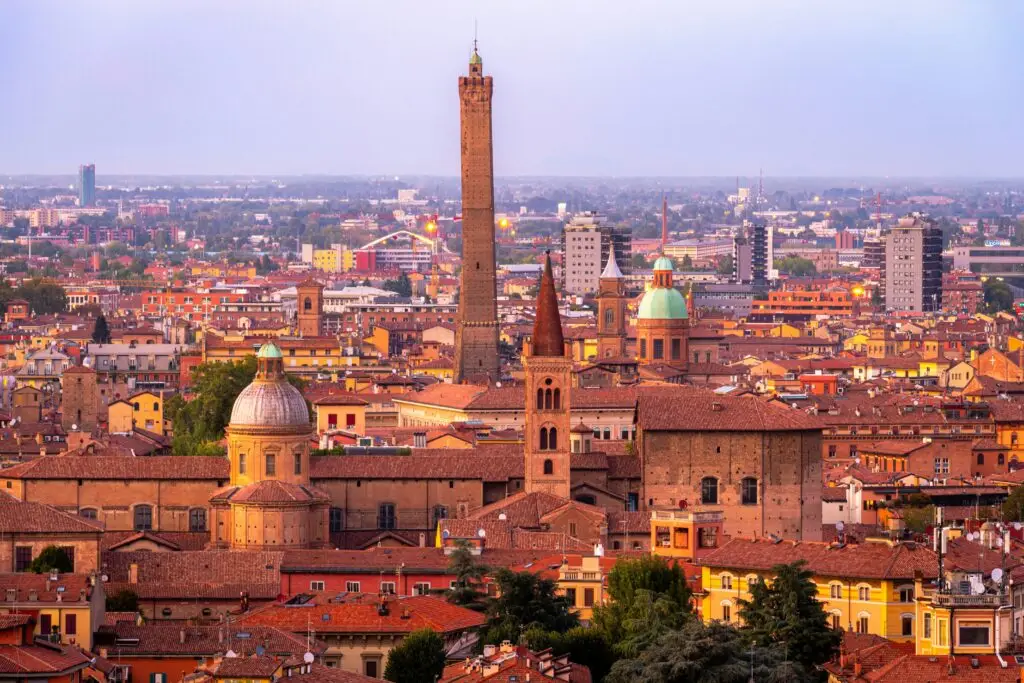
Thinking of spending a few days solo on a food trip to Bologna? Just a word of warning before I continue my short guide.
Spaghetti bolognese is not a thing. Not here in Bologna. (and definitely also not here in Boulogne)
If that’s what you’re looking for, you’d be better off going somewhere else. Or just staying at home and buying a ready-meal. Same goes for baloney/polony sausage. If that’s what you’re after, save your money and just go buy a sandwich in Subway.
Read on if you’re not…
Main photo by Petr Slováček on Unsplash
Affiliate Disclosure
This post doesn’t actually contain affiliate links. If you book through them, I won’t earn a penny. They are my gift to you
Table of Contents
Bologna is serious about food
However, if you’re looking for tagliatelle with ragù alla bolognese, or Mortadella Bologna, hang around. Because Bologna is the Italian mother ship calling you home. It has is a food culture so deep and serious the city legally registered several of its recipes with its Chamber of Commerce (presumably so nobody’s nonna can be dragged into court over a ragù dispute)
Bologna’s old nickname is La Grassa or “the fat one” (“sniggers”) for a good and fairly obvious reason. It might not have many Michelin stars to its name (there’s just one restaurant in the centre of town that has a star ATM I Portici, and there’s a couple of others dotted around the burbs and nearby) but don’t let that fool you. This is a food-lover’s paradise, with great-value excellent eateries and bars on almost every street corner.
This guide isn’t meant to be a list of restaurants – there’s plenty of websites like that out there already. Use your own judgement, knowing you’ll find it difficult to have a crappy meal. Rather, these are some food-first ideas on how you could spend a few days giving your tummy a lovely delicious treat. And your doctor an absolute blue screaming fit (this is not healthy food. Sorry not sorry)
Day 1: The Quadrilatero: Bologna’s foodie square
Start your trip to Bologna wandering slowly round here, hungry. With your stretchy eating pants on.
The Quadrilatero (literally “quadrilateral”) is the rectangular noisy tangle of medieval streets just east of Piazza Maggiore, and bound by Via Pescherie Vecchie, Via Drapperie and Via Clavature. This is where you’ll find some of Bologna’s best produce, cured meats, wine (“there it is! We were wondering when he was going to get to mentioning booze”), cheese and (bizarrely) pharmacists (“hangover cures. I’m going with that”).
Go early, ideally on a weekday. Saturday mid-morning can be a shouty scrum. And you will lose every time to an Italian nonna on a mission to cook. Tuesdays at 9am however, you’ll probably just have to put up with a few noisy fishmongers and maybe some wet cobblestones, but you’ll actually have room to move – even if there are a few hungry nonnas on the hunt.
- Salumeria Simoni (Via Drapperie): the mortadella headquarters. Order a tagliere misto and a glass of wine. Snacks are important
- Tamburini (Via Caprarie): an institution since 1932, part deli, part self-service tavola calda.
- Mercato di Mezzo: the covered market at the heart of it all, this is now a multi-floor food court, and TBH is in danger of becoming a bit of a tourist hotspot. Ugh (“you know what you’re writing, right?”) Good for a browse and a coffee; less good if you’re after somewhere quiet.
- Osteria del Sole (Vicolo Ranocchi) — apparently been serving up wine since 1465. No food is served, but you can bring your own from the surrounding stalls. Democratic, chaotic, entirely charming.
Day 2: The Holy Trinity of Bolognese food
Plan for a snack or two, a leisurely lunch and end the day with a slow late dinner.
There’s probably 3 dishes that Bologna is most famous for, so plan your gorge-fest around these.
- Tortellini in brodo. Small pasta parcels filled with a combination of pork, prosciutto, mortadella, and usually a grating of nutmeg. Around here, they’re served in their own steamy hot jacuzzi of clear broth, and dusted with parmesan.
- Tagliatelle al ragù. This is the grandpappy of all spaghetti bolognese that we eat in mid-range chain restaurants. A slow-cooked, rich meat sauce, where tomato plays only a supporting role here rather than taking the lead. It is served with flat ribbons of pasta rather, rather than spaghetti because thin strands of spaghetti won’t hold the sauce. The official recipe is on file with the local Chamber of Commerce. trufact.
- Mortadella. Technically this is a cold cut which is one of the 5 major food groups, alongside custard deserts, chocolate, crispy bits and wine (“we’d noticed!”). Silky, studded with fat & pistachio, flavoured with pepper & myrtle berries, mortadella from Bologna is absolutely nothing like the pink rubbery fat-salt emulsion that is baloney. Eat it thinly sliced on its own, or with bread. Or even in bed,
OK, I said up there that this wasn’t a listicle (“a WHAT? oh, hang on, totally misreaed that…”) but here’s a short list of places to try all 3:
- Osteria dell’Orsa: the local institution for tortellini in brodo, based in the university district. It’s great value, infomal, and usually packed.
- Trattoria Anna Maria: is slightly more fancy – it’s got actual table cloths – and is dripping in family tradition. Expect to fill your face with some of the most authentic handmade Bolognese dishes in town.
- Trattoria di Via Serra. Is a 25 minute walk from the cathedral, doesn’t take online reservations, and is only open for a few hours fir lunch and dinner Tuesday through Saturday. But worth the hassle, as this place constantly gets rave reviews. Check it out on the Michelin guide here.
A full sit-down meal with wine will usually only cost €20–35 or so. And solo dining is easy and from what I saw, not that uncommon. This is not an expensive city to eat extremely well in, which is either reassuring or faintly insulting (depending on what you paid for that sandwich at the airport on the way out).
Day 3: atone for your food sins
- The main square in Bologna is the Piazza Maggiore , which is where you’ll find the famous Basilica of San Petronio. The church is a useful lesson in why you shouldn’t get too flashy and annoy your boss, specially if he’s the pope. Great place to visit for a few hours, ideally round noon, so you can see one of the world’s largest working sundials
- Nearby is the Sanctuary of Santa Maria della Vita. This is where you can see one of the most harrowing pieces of renaissance art, Niccolò dall’Arca’s Lamentation over the Dead Christ in terracotta. Don’t miss seeing this on your visit.
- Learn about the history of the history of the Jewish community in Bologna, by visiting the Museo Ebraico. The Via dell’Inferno was once the heart of the old medieval Jewish Ghetto. Nowadays, this area is all alleyways and covered bridges with small windows that tells the story of a community that was forced to live in a confined area of the cities during the 16th century
Don’t miss out
Aperitivo time, Bolognese style
Every evening between six and eight, is aperitivo time, so grab yourself a drink. Order a Spritz, or even better, why not try a glass of the local Pignoletto (Bologna’s answer to proseco). In the more up-market bars, a proper spread of snacks will arrive with the drink, no extra charge. Around Via del Pratello, the studenty, bohemian part of town, it’s not unheard of these aperitivo spreads to be substantial enough to be an actual dinner, so be warned! You’ve got a dinner reservation later, remember, so don’t go too feral.
Gelato, because holiday
Gelato is proof that God does indeed exist, and that s/he’s Italian. I’ve been known to eat my way through 4 cones in a day, and then take a tub of something creamy and fruity back to my hotel to eat in bed. (“Is he still talking about ice cream here?”).
The best places will likely have a queue of Italians outside, and you’re best avoiding anywhere with fluorescent-coloured mountains of gloop piled improbably high – that’s more than likely a sign it’s been whipped full of air and additives. Although quite honestly, it’s nearly all delicious and worth the calories, The best stuff sits low and matte in its tub. Pistachio and dark chocolate flavours are the a good benchmark test of any gelateria in Italy. My personal favourites though are liquorice and tutti fruiti, which I usually have to hunt out. It’s a tough life
Bologna takes it’s gelato seriously. I present to you Carpigiani Gelato University in all its icy glory.